




 Home

- Allergies
- Acid Reflux
- ADHD
- Anxiety Disorders
- Arthritis
- Asthma
- Back Pain
- Bipolar Disorder
- Cancer
- Cholesterol
- Cold, Flu, & Cough
- COPD
- Depression
- Diabetes
- Eye Health
- Fibromyalgia
- Heart Disease
- Heartburn/GERD
- Hypertension
- Incontinence/OAB
- Migraines
- Osteoporosis
- Rheumatoid Arthritis
- Sexual Conditions
- Sleep Disorders
- Celebrity Secrets
- Skin Problems
- Multiple Sclerosis
- X-Rays
- Yellow Fever
- Yoga
- Women's Health
- Vitamins
- Weight Loss
- Wisdom Teeth
- Ultrasounds
- Transplant
- Skin Cancer
- Pain Management
- Palliative Care
- Pneumonia
- Obesity
- Mental Health
- Liver Cancer
- Lung Disease
- Labor and Delivery
- Knee Replacement Surgery
- Kidney Stones
- Jaundice
- Integrative Medicine
- Infections
- Interventional Pulmonology
- Headaches
- High blood preasure
- HIV/AIDS
- Fever
- Gestational Diabetes
- Gas
- Food Poisoning
- Oral Care
- Dengue Fever
- Ear Infections
- Diarrhea
- Dry Skin
- Cholera
- Children's Health
- Chickenpox
- Brain Diseases
- Lower Back pain
- Bone Tumors
- Anemia
- Avoidant Personality Disorder
- Aging
- Alcohol Interaction With Medication
- Burns
- Cataracts
- Chlamydia

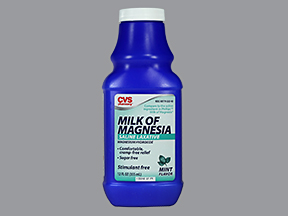
Magnesium is a naturally occurring mineral. Magnesium is important for many systems in the body especially the muscles and nerves. Magnesium hydroxide also reduces stomach acid, and increases water in the intestines which may induce defecation.
Magnesium hydroxide is used as a laxative to relieve occasional constipation (irregularity) and as an antacid to relieve indigestion, sour stomach, and heartburn.
Magnesium hydroxide may also be used for purposes not listed in this medication guide.
This medicine has both a laxative and an antacid action. It helps relieve the symptoms associated with excess acid such as flatulence, heartburn, and indigestion as well as constipation that occurs occasionally.
Magnesium hydroxide works as an antacid by neutralising excess acid in the stomach, and relieves symptoms of excess acid such as stomach discomfort, indigestion, heartburn and flatulence. Magnesium hydroxide when used as a laxative works by absorbing water into the stool and increases the volume and water content of stools. The stools become softer and are easy to pass.
This medicine is available in the form of a liquid which is taken by mouth. You may take this medicine with milk or water.
It is best to take this medicine at night time if you are taking it for its laxative effect.
Make sure you drink plenty of fluids while you are taking this medicine.
As this medicine may be used to relieve hyperacidity symptoms or constipation, it is important that you take the appropriate dose to treat your condition.
If you are taking this medicine for its laxative effect, do not take this medicine continuously for more than three days. If you are taking this medicine for its antacid effect, do not take this medicine continuously for more than 14 days.
If you get diarrhoea, stop taking this medicine immediately. Consult your doctor if your symptoms do not improve or if they get worse during treatment with this medicine.
Studies indicate that people who take proton pump inhibitor medications (such as Nexium) may be at an increased risk for broken bones. The risk appears to be highest for people who take such medications at high doses or for long periods (over a year). You and your healthcare provider should take this into account when deciding if the benefits of this medication outweigh the risks for your particular situation.
The use of proton pump inhibitors (including this medication) may increase the risk of a potentially serious condition known as Clostridium difficile-associated diarrhea (CDAD). If you develop diarrhea that does not seem to improve (especially if it is watery and accompanied by a fever and abdominal pain), seek immediate medical attention.
The prominent consumer watchdog group Public Citizen has filed a petition with the FDA, indicating that a new black box warning for Nexium, Prilosec and other proton pump inhibitor drugs is necessary to warn consumers and the medical community about the risk of long-term dependence and other dangerous side effects.
According to the petition (PDF) filed with the FDA on Tuesday, Public Citizen indicates that the strongest possible warning label is necessary for the widely used acid reflux drugs, which were prescribed more than 119 million times in 2009 and generated sales in the United States of $13.6 billion.
An estimated one out of every 20 people in the developed world are currently taking a proton pump inhibitor (PPI) to reduce the production of stomach acid in an attempt to alleviate symptoms of gastroesophageal reflux disease (GERD), ulcers and other stomach ailments. In addition to Nexium and Prilosec, other drugs in the same class included Prevacid, Zegerid, Protonix, Dexilant, Aciphex, Vimovo and a number of generic equivalents.
The prominent consumer watchdog group Public Citizen has filed a petition with the FDA, indicating that a new black box warning for Nexium, Prilosec and other proton pump inhibitor drugs is necessary to warn consumers and the medical community about the risk of long-term dependence and other dangerous side effects.�
According to the petition (PDF) filed with the FDA on Tuesday, Public Citizen indicates that the strongest possible warning label is necessary for the widely used acid reflux drugs, which were prescribed more than 119 million times in 2009 and generated sales in the United States of $13.6 billion.
An estimated one out of every 20 people in the developed world are currently taking a proton pump inhibitor (PPI) to reduce the production of stomach acid in an attempt to alleviate symptoms of gastroesophageal reflux disease (GERD), ulcers and other stomach ailments. In addition to Nexium and Prilosec, other drugs in the same class included Prevacid, Zegerid, Protonix, Dexilant, Aciphex, Vimovo and a number of generic equivalents.
- See more at: http://www.aboutlawsuits.com/black-box-warnings-nexium-prilosec-ppi-20578/#sthash.tsY5GfDG.dpufThe prominent consumer watchdog group Public Citizen has filed a petition with the FDA, indicating that a new black box warning for Nexium, Prilosec and other proton pump inhibitor drugs is necessary to warn consumers and the medical community about the risk of long-term dependence and other dangerous side effects.�
According to the petition (PDF) filed with the FDA on Tuesday, Public Citizen indicates that the strongest possible warning label is necessary for the widely used acid reflux drugs, which were prescribed more than 119 million times in 2009 and generated sales in the United States of $13.6 billion.
An estimated one out of every 20 people in the developed world are currently taking a proton pump inhibitor (PPI) to reduce the production of stomach acid in an attempt to alleviate symptoms of gastroesophageal reflux disease (GERD), ulcers and other stomach ailments. In addition to Nexium and Prilosec, other drugs in the same class included Prevacid, Zegerid, Protonix, Dexilant, Aciphex, Vimovo and a number of generic equivalents.
- See more at: http://www.aboutlawsuits.com/black-box-warnings-nexium-prilosec-ppi-20578/#sthash.tsY5GfDG.dpufThis medication is used for a short time to treat occasional constipation. It is a laxative (osmotic-type) that is thought to work by drawing water into the intestines, an effect that helps to cause movement of the intestines.
This medication is also used to treat symptoms caused by too much stomach acid such as heartburn, upset stomach, or indigestion. It is an antacid that works by lowering the amount of acid in the stomach.
How to use Milk of Magnesia
Take this product by mouth as directed. For the chewable form, chew thoroughly before swallowing. For the liquid form, shake the bottle well before each dose. Carefully measure the dose using a special measuring device/spoon. Do not use a household spoon because you may not get the correct dose. If you are taking this medication for constipation, drink a full glass of water (8 ounces or 240 milliliters) with each dose. Follow all directions on the product package, or use as directed by your doctor. If you are uncertain about any of the information, consult your doctor or pharmacist.
Dosage is based on your medical condition and response to treatment.
Extended use or overuse of this medication for constipation may result in dependence on laxatives and ongoing constipation. Overuse may also cause persistent diarrhea, loss of too much body water (dehydration), and mineral imbalances (e.g., high magnesium).
Tell your doctor if your condition persists or worsens. For constipation problems, it may take 30 minutes to 6 hours to produce a bowel movement. Tell your doctor if this product does not produce a bowel movement, if you need to use this medication or other laxative products regularly for more than 1 week, or if you have rectal bleeding. For stomach acid problems, do not take the maximum dose of this medication for more than 2 weeks unless directed by your doctor. If you think you may have a serious medical problem, seek immediate medical attention.
Diarrhea may occur. If this effect persists or worsens, tell your doctor or pharmacist promptly.
If your doctor has directed you to use this medication, remember that he or she has judged that the benefit to you is greater than the risk of side effects. Many people using this medication do not have serious side effects.
Tell your doctor immediately if any of these unlikely but serious side effects occur: symptoms of high magnesium levels (e.g., muscle weakness, slow/irregular heartbeat, slow/shallow breathing, mental/mood changes such as confusion), symptoms of dehydration (e.g., decreased urination, dizziness, extreme thirst, very dry mouth), stomach/abdominal pain, bloody stools, rectal bleeding.
A very serious allergic reaction to this drug is rare. However, seek immediate medical attention if you notice any symptoms of a serious allergic reaction, including: rash, itching/swelling (especially of the face/tongue/throat), severe dizziness, trouble breathing.
This is not a complete list of possible side effects. If you notice other effects not listed above, contact your doctor or pharmacist.
In the US -
Call your doctor for medical advice about side effects. You may report side effects to FDA.
In Canada - Call your doctor for medical advice about side effects. You may report side effects to Health Canada.
Before taking magnesium hydroxide, tell your doctor or pharmacist if you are allergic to it; or if you have any other allergies. This product may contain inactive ingredients, which can cause allergic reactions or other problems. Talk to your pharmacist for more details.
Before using this medication, tell your doctor or pharmacist your medical history, especially of: kidney disease, appendicitis or symptoms of appendicitis (e.g., stomach/abdominal pain, nausea/vomiting), magnesium-restricted diet, sudden change in bowel habits that lasts for longer than 2 weeks.
During pregnancy, this medication should be used only when clearly needed. Discuss the risks and benefits with your doctor.
It is not known whether this drug passes into breast milk. Consult your doctor before breast-feeding.
Drug interactions may change how your medications work or increase your risk for serious side effects. This document does not contain all possible drug interactions. Keep a list of all the products you use (including prescription/nonprescription drugs and herbal products) and share it with your doctor and pharmacist. Do not start, stop, or change the dosage of any medicines without your doctor's approval.
Some products that may interact with this drug include: raltegravir, sodium polystyrene sulfonate.
Magnesium hydroxide can decrease the absorption of other drugs such as dasatinib, delavirdine, atazanavir, gabapentin, digoxin, mycophenolate, phosphate supplements (e.g., potassium phosphate), tetracycline antibiotics (e.g., doxycycline, minocycline), certain azole antifungals (ketoconazole, itraconazole), and quinolone antibiotics (e.g., ciprofloxacin, levofloxacin). Therefore, separate your doses of these medications as far as possible from your doses of magnesium hydroxide. Ask your doctor or pharmacist about how long you should wait between doses and for help finding a dosing schedule that will work with all your medications.
If overdose is suspected, contact a poison control center or emergency room immediately. US residents can call their local poison control center at 1-800-222-1222. Canada residents can call a provincial poison control center. Symptoms of overdose may include: severe/persistent diarrhea, muscle weakness, mental/mood changes (e.g., confusion), slow/irregular heartbeat, decreased urination, dizziness.
Notes
Keep all regular medical and laboratory appointments.
Lifestyle changes such as regular exercise and diet changes (e.g., drinking enough water, eating a proper diet with fiber-rich foods such as bran, fresh fruits/vegetables) may prevent or relieve constipation.
Lifestyle changes such as stress reduction programs, stopping smoking, limiting alcohol, and diet changes (e.g., avoiding caffeine/certain spices) may help to reduce heartburn and other stomach acid problems.
Talk to your doctor or pharmacist about lifestyle changes that might benefit you.
Missed Dose
Not applicable.
Storage
Store at room temperature away from light and moisture. If you have any questions about storage, ask your pharmacist. Do not store in the bathroom. Keep all medicines away from children and pets.
Do not flush medications down the toilet or pour them into a drain unless instructed to do so. Properly discard this product when it is expired or no longer needed. Consult your pharmacist or local waste disposal company for more details about how to safely discard your product.
Information last revised November 2013. Copyright(c) 2013 First Databank, Inc.


