




 Home

- Allergies
- Acid Reflux
- ADHD
- Anxiety Disorders
- Arthritis
- Asthma
- Back Pain
- Bipolar Disorder
- Cancer
- Cholesterol
- Cold, Flu, & Cough
- COPD
- Depression
- Diabetes
- Eye Health
- Fibromyalgia
- Heart Disease
- Heartburn/GERD
- Hypertension
- Incontinence/OAB
- Migraines
- Osteoporosis
- Rheumatoid Arthritis
- Sexual Conditions
- Sleep Disorders
- Celebrity Secrets
- Skin Problems
- Multiple Sclerosis
- X-Rays
- Yellow Fever
- Yoga
- Women's Health
- Vitamins
- Weight Loss
- Wisdom Teeth
- Ultrasounds
- Transplant
- Skin Cancer
- Pain Management
- Palliative Care
- Pneumonia
- Obesity
- Mental Health
- Liver Cancer
- Lung Disease
- Labor and Delivery
- Knee Replacement Surgery
- Kidney Stones
- Jaundice
- Integrative Medicine
- Infections
- Interventional Pulmonology
- Headaches
- High blood preasure
- HIV/AIDS
- Fever
- Gestational Diabetes
- Gas
- Food Poisoning
- Oral Care
- Dengue Fever
- Ear Infections
- Diarrhea
- Dry Skin
- Cholera
- Children's Health
- Chickenpox
- Brain Diseases
- Lower Back pain
- Bone Tumors
- Anemia
- Avoidant Personality Disorder
- Aging
- Alcohol Interaction With Medication
- Burns
- Cataracts
- Chlamydia
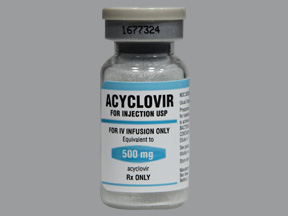
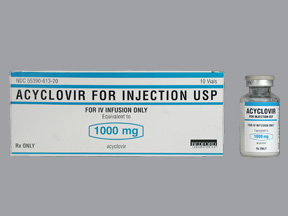
The authors make no claims of the accuracy of the information contained herein; and these suggested doses are not a substitute for clinical judgment. Neither GlobalRPh Inc. nor any other party involved in the preparation of this program shall be liable for any special, consequential, or exemplary damages resulting in whole or part from any user's use of or reliance upon this material.
The resulting solution contains 50 mg acyclovir per mL (pH approximately 11). Shake the vial well to assure complete dissolution before measuring and transferring each individual dose. The reconstituted solution should be used within 12 hours. Refrigeration of reconstituted solution may result in the formation of a precipitate which will redissolve at room temperature.
The calculated dose should then be removed and added to any appropriate intravenous solution at a volume selected for administration during each 1 hour infusion. Infusion concentrations of approximately 7 mg/mL or lower are recommended. In clinical studies, the average 70 kg adult received between 60 and 150 mL of fluid per dose. Higher concentrations (e.g., 10 mg/mL) may produce phlebitis or inflammation at the injection site upon inadvertent extravasation. Standard, commercially available electrolyte and glucose solutions are suitable for intravenous administration; biologic or colloidal fluids (e.g., blood products, protein solutions, etc.) are not recommended.
Once diluted for administration, each dose should be used within 24 hours.
Parenteral drug products should be inspected visually for particulate matter and discoloration prior to administration, whenever solution and container permit.
Therapy should be initiated as early as possible following onset of signs and symptoms of herpes infections. A maximum dose equivalent to 20 mg/kg every 8 hours should not be exceeded for any patient.
Valtrex precautions and warnings include potential drug interactions, possible risks for people with poor kidney function, and whether women who are nursing should take it. Before taking Valtrex, talk to your healthcare provider about any health conditions you may have, such as kidney disease, AIDS, or depression. Valtrex precautions and warnings also extend to any medications you are taking, including prescription and non-prescription medications, vitamins, and herbal supplements.
Valtrex is considered a pregnancy Category B medication. This means that Valtrex is probably safe for use during pregnancy. However, because Valtrex has not been studied in pregnant women, the full risks of using it during pregnancy are not known. Women who are pregnant should take Valtrex only if the benefits outweigh the risks to the developing baby. Discuss possible risks and benefits with your healthcare provider before using Valtrex when pregnant.
Valtrex is passed through breast milk. Therefore, if you are breastfeeding, or plan to start breastfeeding, be sure to talk with your healthcare provider about this. He or she can decide whether taking Valtrex while nursing is okay for your particular situation.
Valtrex can cause central nervous system side effects, such as confusion, hallucinations, delirium, or seizures, especially if a person is given too high of a dosage with respect to his or her kidney function.
A serious condition called thrombotic thrombocytopenic purpura/hemolytic uremic syndrome (TTP/HUS) has occurred in certain people taking Valtrex. TTP/HUS is a condition involving very low red blood cell and platelet counts. In TTP/HUS, the body forms many small blood clots. This dangerous condition has occurred in people with HIV and people who have had a stem cell transplant or kidney transplant. These people were taking unusually high doses of Valtrex (8 grams per day). Talk to your healthcare provider right away if you have signs of TTP/HUS, including unusual bruising and bleeding or unexplained fever. Valtrex precautions and warnings include potential drug interactions, possible risks for people with poor kidney function, and whether women who are nursing should take it. Before taking Valtrex, talk to your healthcare provider about any health conditions you may have, such as kidney disease, AIDS, or depression. Valtrex precautions and warnings also extend to any medications you are taking, including prescription and non-prescription medications, vitamins, and herbal supplements.
Valtrex is considered a pregnancy Category B medication. This means that Valtrex is probably safe for use during pregnancy. However, because Valtrex has not been studied in pregnant women, the full risks of using it during pregnancy are not known. Women who are pregnant should take Valtrex only if the benefits outweigh the risks to the developing baby. Discuss possible risks and benefits with your healthcare provider before using Valtrex when pregnant.
Valtrex is passed through breast milk. Therefore, if you are breastfeeding, or plan to start breastfeeding, be sure to talk with your healthcare provider about this. He or she can decide whether taking Valtrex while nursing is okay for your particular situation.
Valtrex can cause central nervous system side effects, such as confusion, hallucinations, delirium, or seizures, especially if a person is given too high of a dosage with respect to his or her kidney function.
A serious condition called thrombotic thrombocytopenic purpura/hemolytic uremic syndrome (TTP/HUS) has occurred in certain people taking Valtrex. TTP/HUS is a condition involving very low red blood cell and platelet counts. In TTP/HUS, the body forms many small blood clots. This dangerous condition has occurred in people with HIV and people who have had a stem cell transplant or kidney transplant. These people were taking unusually high doses of Valtrex (8 grams per day). Talk to your healthcare provider right away if you have signs of TTP/HUS, including unusual bruising and bleeding or unexplained fever.
This medication is used in certain people to treat outbreaks of herpes simplex infection of the skin (e.g., genitals), mucous membrane areas (e.g., mouth, nose), or brain. It is also used in certain people to treat shingles infection. The viruses that cause these infections live in the body quietly until an outbreak occurs. Acyclovir does not cure these infections, but can speed healing of the sores, decrease pain/itching/formation of new sores, and lower the risk of other problems from the virus (e.g., infection spreading to other parts of the body/organs, persistent pain after sores heal).
How to use acyclovir sodium intravenous
This medication is given by slow injection into a vein as directed by your doctor. It is usually given every 8 hours. It should be injected slowly over 1 hour. Do not inject rapidly. Start this medication as soon as signs or symptoms of a herpes infection occur. Dosage is based on your medical condition, weight, and response to treatment.
If you are giving this medication to yourself at home, learn all preparation and usage instruction from your health care professional. Before using, check this product visually for particles or discoloration. If either is present, do not use the liquid. Learn how to store and discard medical supplies safely.
This medication works best when the amount of medicine in your body is kept at a constant level. Therefore, use this drug at evenly spaced intervals.
Continue to use this medication until the full prescribed amount is finished, even if symptoms disappear after a few days. Stopping the medication too early may result in a return of the outbreak.
Drink plenty of fluids while receiving this medication unless your doctor directs you otherwise.
Tell your doctor if your condition persists or worsens.
Nausea, vomiting, or loss of appetite may occur. If any of these effects persist or worsen, tell your doctor or pharmacist promptly.
Remember that your doctor has prescribed this medication because he or she has judged that the benefit to you is greater than the risk of side effects. Many people using this medication do not have serious side effects.
Tell your doctor right away if you have any serious side effects, including: pain/swelling at the injection site, shaking, dizziness, drowsiness, unusual tiredness, fast/pounding heartbeat, easy bruising/bleeding, new signs of infection (e.g., fever, persistent sore throat), bloody/dark urine, severe stomach/abdominal pain, yellowing eyes/skin, change in the amount of urine, mental/mood changes (e.g., agitation, confusion, hallucinations), loss of consciousness, vision changes, seizures.
A very serious allergic reaction to this drug is rare. However, seek immediate medical attention if you notice any symptoms of a serious allergic reaction, including: rash, itching/swelling (especially of the face/tongue/throat), severe dizziness, trouble breathing.
This is not a complete list of possible side effects. If you notice other effects not listed above, contact your doctor or pharmacist.
In the US -
Call your doctor for medical advice about side effects. You may report side effects to FDA.
In Canada - Call your doctor for medical advice about side effects. You may report side effects to Health Canada.
Before using acyclovir, tell your doctor or pharmacist if you are allergic to it; or to valacyclovir; or if you have any other allergies. This product may contain inactive ingredients, which can cause allergic reactions or other problems. Talk to your pharmacist for more details.
Before using this medication, tell your doctor or pharmacist your medical history, especially of: kidney disease, liver disease, immune system problems.
This medication contains sodium. Consult your doctor or pharmacist if you are on a salt-restricted diet or if you have a condition that could be worsened by an increase in salt intake (e.g., congestive heart failure).
Before having surgery, tell your doctor or dentist about all the products you use (including prescription drugs, nonprescription drugs, and herbal products).
Do not have certain immunizations/vaccinations (such as vaccines against the varicella virus) without the consent of your doctor.
Older adults may be more sensitive to the side effects of the drug, especially mental/mood changes (such as agitation, confusion).
During pregnancy, this medication should be used only when clearly needed. Discuss the risks and benefits with your doctor.
This medication passes into breast milk. Consult your doctor before breast-feeding.
Drug interactions may change how your medications work or increase your risk for serious side effects. This document does not contain all possible drug interactions. Keep a list of all the products you use (including prescription/nonprescription drugs and herbal products) and share it with your doctor and pharmacist. Do not start, stop, or change the dosage of any medicines without your doctor's approval.
Some products that may interact with this drug include: other drugs that may cause kidney problems (including nonsteroidal anti-inflammatory drugs-NSAIDs such as ibuprofen, naproxen).
Acyclovir is very similar to valacyclovir. Do not use medications containing valacyclovir while using acyclovir.
If overdose is suspected, contact a poison control center or emergency room immediately. US residents can call their local poison control center at 1-800-222-1222. Canada residents can call a provincial poison control center. Symptoms of overdose may include: change in the amount of urine, seizures, extreme tiredness, loss of consciousness, agitation.
Notes
To reduce the risk of spreading genital herpes to others, stop all sexual activity during an outbreak until it is completely healed. At all other times, use effective barrier protections (e.g., latex or polyurethane condoms, dental dams) during all sexual activity. Consult your doctor or pharmacist for more details.
Laboratory and/or medical tests (e.g., kidney function test) should be performed periodically to monitor your progress or check for side effects. Consult your doctor for more details.
Missed Dose
For the best possible benefit, it is important to receive each scheduled dose of this medication as directed. If you miss a dose, contact your doctor or pharmacist immediately to establish a new dosing schedule. Do not double the dose to catch up.
Storage
Consult the product instructions and your pharmacist for storage details. Keep all medicines away from children and pets.
Do not flush medications down the toilet or pour them into a drain unless instructed to do so. Properly discard this product when it is expired or no longer needed. Consult your pharmacist or local waste disposal company.
Information last revised March 2014. Copyright(c) 2014 First Databank, Inc.


