

Amazon uses imaginary press releases and requires engineers building products like the Echo to ‘have backbone’
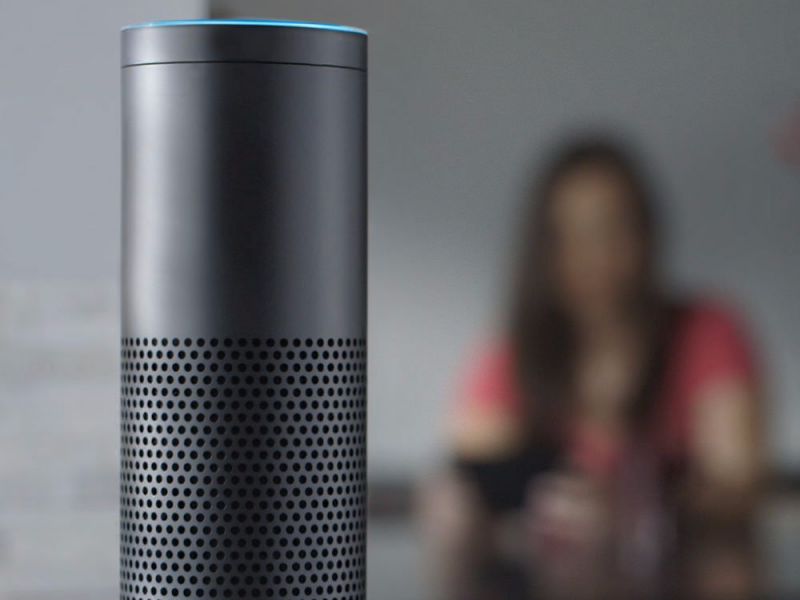
Amazon uses imaginary press releases and requires engineers building products like the Echo to ‘have backbone’ : Amazon’s voice-controlled speaker Echo, along with the Alexa software that powers the device, have turned into a surprise hit for the company.
Some analysts believe the Echo will bring in another $11 billion of revenue for Amazon by 2020, between sales of the device itself and all the extra stuff people will buy from Amazon using the Echo.
And it all started with a fake, pretend “aspirational” press release, said Mike George, vice president of Amazon Echo, at the Churchill Club annual award ceremony when accepting its “Magical Team” award last week.
When someone comes up with a possible product idea, Amazon honchos ask themselves, “Can this be fundamentally important to our customers? Can it be game-changing? Can we do it?” he described.
And then they try to think big, he explained:
“We have a thing called ‘working backwards.’ The first thing we do is we write a press release, ignoring every technical thing we can’t do for now. It’s our aspirations. We also write FAQs where we identify every question we would receive as if we issued the press release. We answer the question in aspirational ways too, ignoring, for the moment, the technical hurdles. In some cases we actually build things.”
The idea is to dream about what this product could be.
The next step is to hash out the idea between a team of experts that would potentially work on the new product.
“There’s a team in there, in a room, debating, from vice presidents to junior software developers,” he says.
Speak up or shut up
Everyone is not only encouraged to speak their mind, they are obligated to, he says. That’s because Amazon has a motto for its engineers: “have backbone.” It means that Amazon wants all the people working on a new product to be onboard with the idea.
“The people in the room are bound to speak up if they think it’s wrong,” he says, because once they agree to be on the team, that’s the same as giving their approval.
“And after that, if we think we have something, we do it,” he says.
The tactic doesn’t always mean the product will be a hit. The Fire phone is probably the classic example, a product that was killed after about a year. George wouldn’t comment on that.
But he did say that Amazon doesn’t tend to give up easily, even when faced with initial failure. He offered Amazon Marketplace as an example.
“We thought we would compete with eBay,” he said and so the company “spent a lot of money” to build an auction site in conjunction with “Z-shops” which were like ecommerce booths where merchants could sell stuff. The auction site didn’t do well. Amazon later discovered that people wanted to buy third-party stuff in conjunction with buying books and retail items, he said.
“We had a lot of failure before we launched Marketplace and today it’s responsible for 50% of our sales. We were willing to take a long-term view,” he said.
Disclosure: Jeff Bezos is an investor in Business Insider through hispersonal investment company Bezos Expeditions.
Source:http://www.businessinsider.in/Amazon-uses-imaginary-press-releases-and-requires-engineers-building-products-like-the-Echo-to-have-backbone/articleshow/54554647.cms

