Home






Candidates
|
Political Parties
|
US State Candidate
|
Congressional Candidates
|
Campaign Buttons
|
The Presidency
|
Election Calendar
|
Awards
Share the joy


Latest News
Politics
11 May 2018
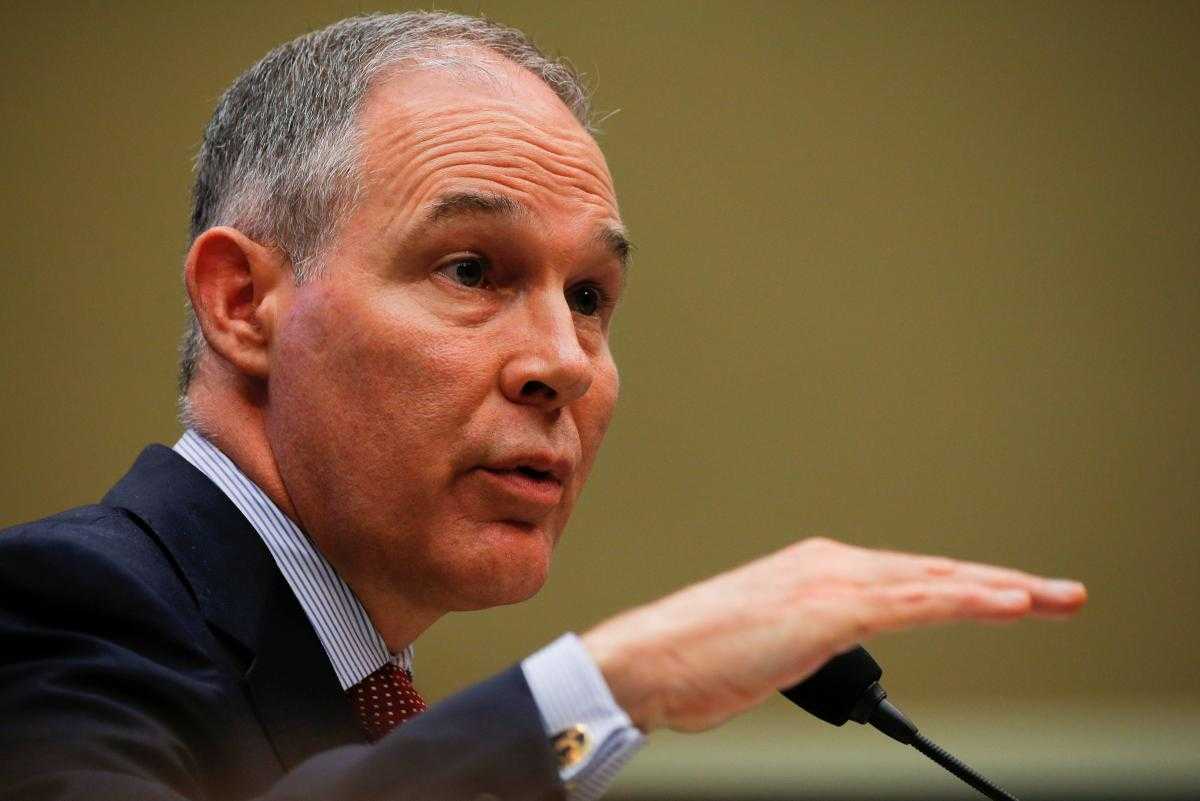
EPA chief Pruitt's ethics issues have raised concerns: White House
Politics
11 May 2018
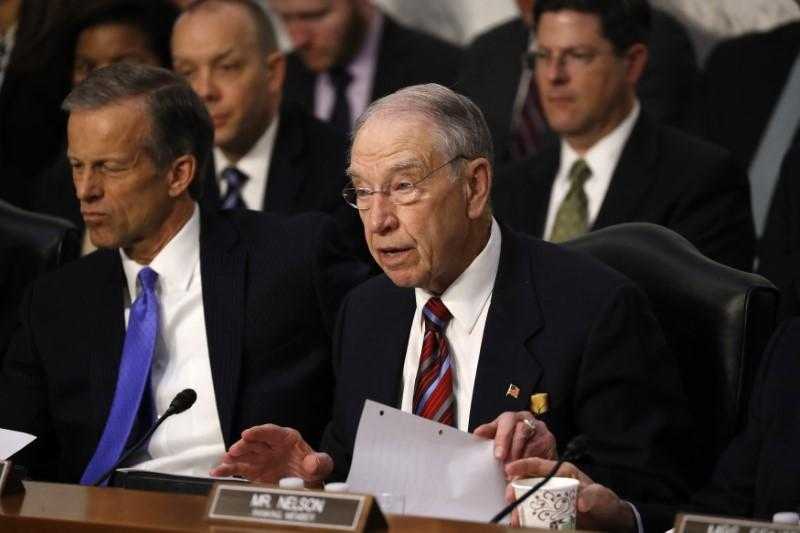
Key senator urges any wavering U.S. high court justice to retire now
Politics
11 May 2018
White House official mocked 'dying' Senator McCain: media
Politics
11 May 2018
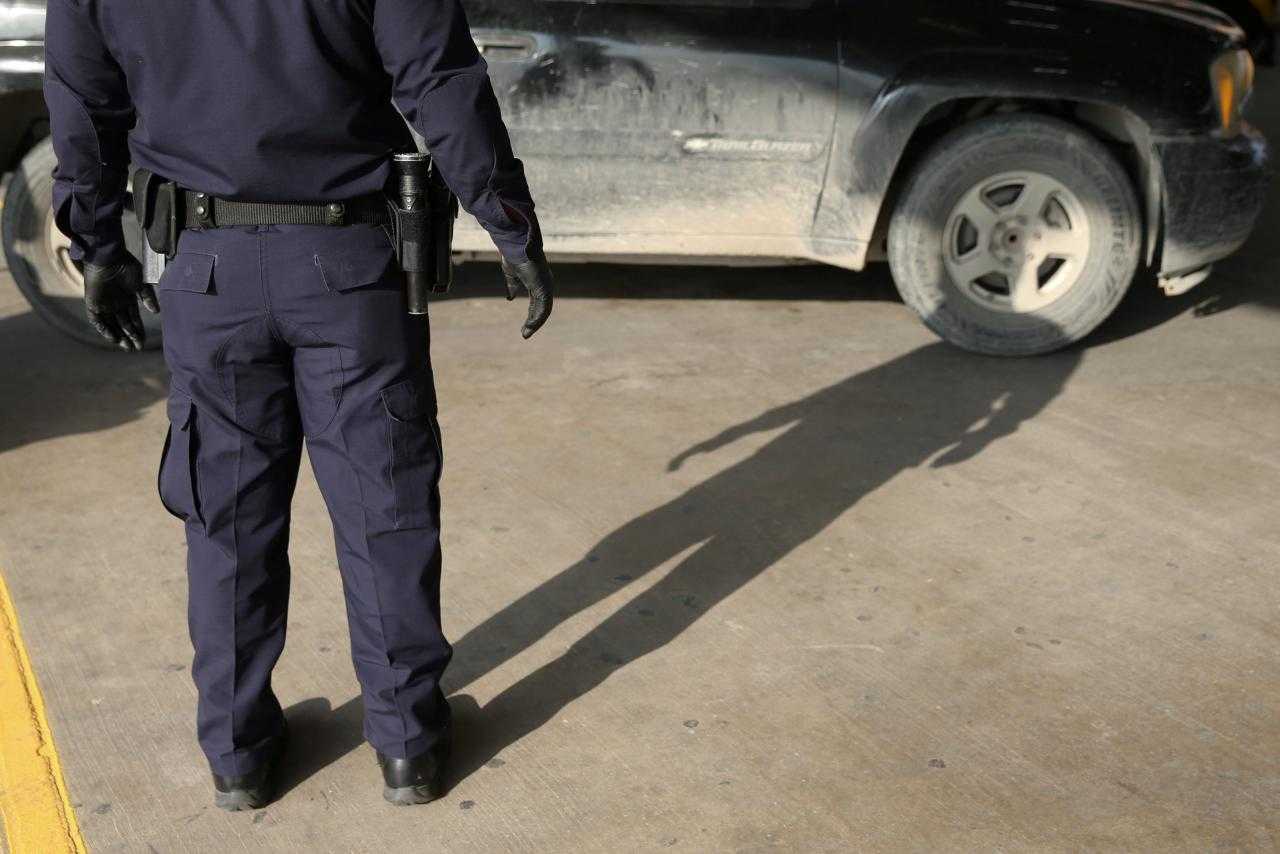
Lawsuit against U.S. border searches of phones can move forward: judge
Politics
11 May 2018
Ex-Illinois congressman sentenced to prison on tax charges
Politics
11 May 2018
Trump administration to reconsider housing bias protections
Politics
10 May 2018
Companies detail payments to Trump lawyer; Daniels' attorney says there's more
Politics
10 May 2018
Concerns over U.S. court backlog grow with rising border prosecutions
Politics
10 May 2018
Trump's CIA pick promises no more harsh interrogation program
Politics
10 May 2018
Cheney, Panetta worry about consequences of Iran deal withdrawal
Politics
10 May 2018
Rebel House Republicans seek to force 'Dreamer' immigration vote
Politics
10 May 2018
3 Americans Freed From North Korea Arrive Near Washington
Politics
19 Dec 2016
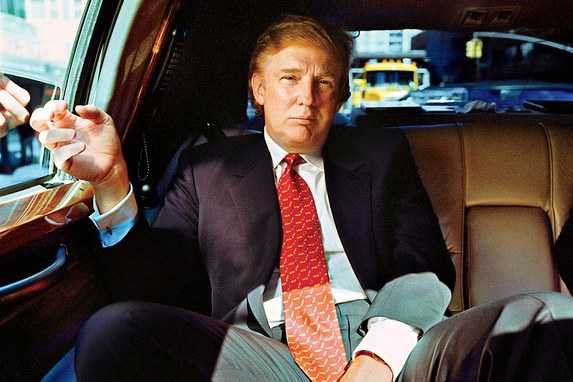

DONALD TRUMP AND THE RULES OF THE NEW AMERICAN BOARD GAME


DONALD TRUMP AND THE RULES OF THE NEW AMERICAN BOARD GAME, donald trump,michael lewis,board game,president,protest,students,berkeley
DONALD TRUMP AND THE RULES OF THE NEW AMERICAN BOARD GAME
The day after the presidential election I went into my teenage daughter’s new high school to volunteer at the front desk. The duties of the Berkeley High front-desk volunteer sound boring—basically they just want you to eyeball the incredible range of humanity that turns up at the front door and decide if it is safe to buzz it in, plus answer the incoming phone calls. But the school has about 3,200 kids in it, from every imaginable circumstance: homeless kids, disabled kids, kids whose parents are legally barred from seeing them, and a surprising number of kids whose parents sneaked into the United States illegally. It draws from every major religion and every tax bracket. At the end of the school year some of its graduates go off to Harvard or Stanford, but others stay home and join gangs. The school may be yet another liberal bubble, but a lot of American life finds its way into it.
The morning after the election about half of the school just up and walked out. They marched to a plaza big enough to serve as an outdoor amphitheater at the nearby University of California campus; there they rose, one after another, and spoke of their fears and sorrow. They did this peacefully and respectfully, and with apparent sincerity—if they had just been looking for an excuse to cut classes they did an excellent job of disguising their motive. The kids who weren’t white seemed genuinely disturbed about having a president cheered by white supremacists. The kids whose parents had sneaked into this country wept openly as they spoke about having a president who sounded as if he’d actually take pleasure in rounding them up. The girls seemed genuinely upset about having a president who bragged about committing sexual assault.
The morning after the election about half of the school just up and walked out. They marched to a plaza big enough to serve as an outdoor amphitheater at the nearby University of California campus; there they rose, one after another, and spoke of their fears and sorrow. They did this peacefully and respectfully, and with apparent sincerity—if they had just been looking for an excuse to cut classes they did an excellent job of disguising their motive. The kids who weren’t white seemed genuinely disturbed about having a president cheered by white supremacists. The kids whose parents had sneaked into this country wept openly as they spoke about having a president who sounded as if he’d actually take pleasure in rounding them up. The girls seemed genuinely upset about having a president who bragged about committing sexual assault.
And so on. After giving 60 or so short speeches the students returned to school, as peacefully as they had left it. By the time my afternoon shift at the front desk began, most of them were back in their classrooms. The only sign that anything unusual had happened was the phone, which was ringing off the hook. The first call I fielded was from a Washington Post reporter looking for someone to interview, but most came from Trump supporters, from as far away as South Carolina, who had seen cable-news reports of the walkout at a California high school. They were livid. A few screamed and cursed. A few said they were going to find ways to cut the school’s funding. All sounded personally offended.
My first instinct was to hide and pretend I had nothing to do with the school or these crazy kids. I explained to the Trump supporters that I was just a new parent volunteer trying to make sure I didn’t transfer the call intended for the football coach to the drama teacher, or buzz a psychopathic killer into the school. I pleaded with them to understand that the school’s administration had nothing to do with the walkout—that the kids had organized it the night before, without any prompting from adults, and there had really been no way of stopping them. A flash flood of worry and grief had sought a channel in the streets, and the school’s only involvement was to send some grown-ups along to make sure the streets remained safe. But the Trump supporters didn’t want to hear any of that. Actually, they didn’t want to hear anything. They wanted to rant—at anyone. In the end I just answered the phone with a robotic answering-machine voice: You have reached Berkeley High. If you would like to leave a message for the principal, press 1. If you would like to jump off the Golden Gate Bridge, press 2. If you would like directions to the Golden Gate Bridge, press 3 … until the caller either hung up, or figured out my game and started hollering.
There was a great deal of information that these people didn’t seem prepared to take on board, but the most important, it seemed to me, was that they had won. Their man was headed to the White House! And yet here they were, glued to cable news, looking for reasons to get themselves outraged and red-faced about the un-greatness of America all over again. Even in victory they were angry. They had what amounted to a need for that particular emotion, and it seemed to lead them to scour the media for whatever might trigger it. But really: How does anyone get himself worked up about a peaceful demonstration staged by a bunch of high-school kids thousands of miles from his front door? And when did anger become its own justification? And how would it sustain itself once Trump became president?
Maybe because I was surrounded by kids—there at Berkeley High School—it occurred to me that the only way to get your mind around a Trump presidency was to imagine it as a game. For instance, you might start by putting yourself in the role of Donald Trump. Your political life now, as ever, turns on your ability to fuel anger. Previously you were able to do this by pointing at the government’s self-evident neglect, corruption, ineptitude, etc. But now you are the government, so that won’t work. Who or what becomes your go-to trigger for anger? The obvious answers—Muslims, undocumented immigrants—score you zero points. No points, in fact, for anything that tracks too closely to the government-sanctioned horrors that occurred in the recent past. Perhaps it can happen here, but not in quite the same way. Most people more or less remember Hitler and Stalin, or at least try to. People always fear the bad things they remember, which are easy to imagine. What they should fear is what they never imagined happening. The anger is going to need to find a more original source of fuel. That’s the point of the game: to imagine who or what that might be.
Source :
Http://www.vanityfair.com/news/2016/12/donald-trump-michael-lewis-the-new-american-board-game
You May also Like